Find Your Peaceful Pause: Simple Mindfulness Activities for Daily Life
Table of Contents
Hey there. If you are reading this, chances are you are feeling the familiar weight of a busy life. The racing thoughts, the endless to-do lists and that sensation of being constantly "on". We get it. Truly.
At Mellowed, we believe that finding a moment of peace shouldn't be another chore on your list. It should be a gentle, comforting pause in your day. This guide is an invitation to explore simple mindfulness activities that can help you find your calm, right where you are.
What are mindfulness activities and why are they so important?
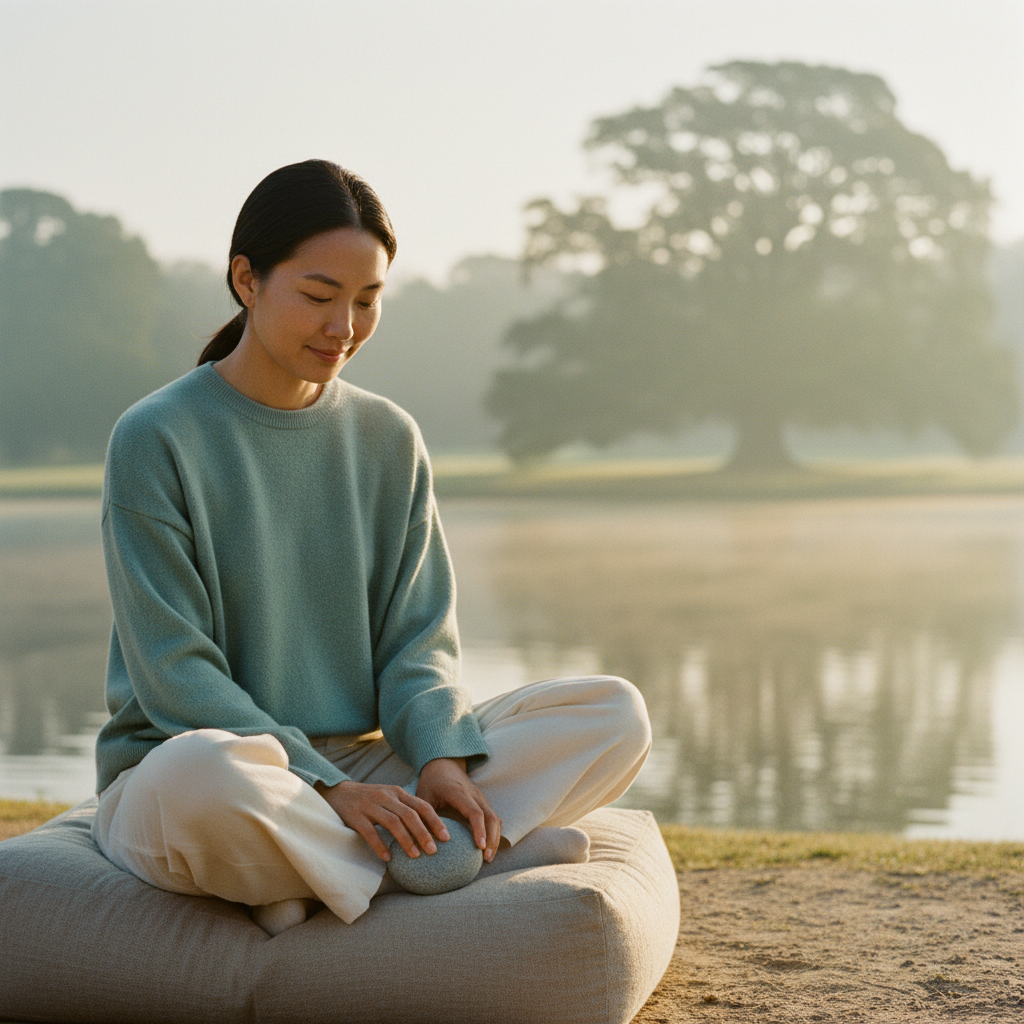
Before we dive into the practical tools, let's clear up a common misunderstanding. Mindfulness isn't about emptying your mind or stopping your thoughts. It is simply the ability to be fully present.
Defining Mindfulness
Think of mindfulness as a gentle awareness. It is about paying attention to what is happening right now, on purpose and without judgment. Jon Kabat-Zinn, a pioneer in this field, describes it as paying attention in a particular way: on purpose, in the present moment and non-judgmentally.
The "non-judgmentally" part is crucial. When you notice you are worried or distracted, you don't criticise yourself. You simply acknowledge it and gently guide your attention back. It is the mental equivalent of a reassuring hug.
What are Mindfulness Activities?
While meditation is a formal training (like going to the gym for your brain), mindfulness activities are the ways we apply that awareness to daily life. These are practical exercises that train the brain to focus on the present.
These activities can be formal, like sitting with a meditation cushion, or informal, like washing dishes with full attention. The beauty is that you don't need special equipment or an hour of silence. You can practise them anywhere.
Why Mindfulness is So Important: The Science-Backed Benefits
Taking a peaceful pause isn't just about feeling nice in the moment. It has profound effects on your mental and physical well-being.
Mental and Emotional Health
Practising mindfulness helps turn down the volume on stress. Research into Mindfulness-Based Stress Reduction (MBSR) shows that these practices can lower cortisol levels, the body's primary stress hormone. It also helps manage anxiety by creating a "pause" between a trigger and your reaction, allowing you to respond with clarity rather than panic. For more ways to support your well-being, explore our collection on stress management.
Cognitive Clarity
Think of mindfulness as a workout for your attention span. It enhances focus and improves working memory. By quieting the mental noise, you open up space for creative problem-solving and clearer thinking.
Physical Well-being
The benefits extend to your body too. The relaxation response can help lower blood pressure and improve cardiovascular health. For those struggling to rest, mindfulness can be a powerful tool to calm a racing mind before bed, leading to deeper, more restorative sleep.
Mindful moments: Easy ways to practise mindfulness in your busy day
You don't need to retreat to a mountaintop to find peace. Here are some simple ways to weave mindfulness into your existing routine.
The Mindful Breath (The Anchor)
Your breath is always with you, making it the perfect anchor to the present moment. This is a one-minute pause you can use in traffic, before a meeting or whilst waiting for the kettle to boil.
- Pause whatever you are doing.
- Sit or stand comfortably.
- Bring your full attention to the sensation of breathing. Feel the air entering your nostrils and filling your lungs.
- Don't try to change your breath. Just observe it.
- When your mind wanders (and it will), gently guide your attention back to the breath.
- Continue for 60 seconds.
Mindful Eating or Drinking
We often rush through meals without tasting a thing. Try transforming your morning coffee or tea into a rich sensory experience.
- See: Look at your tea. Notice the colour and the steam rising.
- Feel: Hold the mug and feel its warmth.
- Smell: Inhale the aroma. What scents do you notice?
- Taste: Take a sip. Notice the temperature and flavour.
- Follow: Feel the liquid as you swallow.

The 5-4-3-2-1 Grounding Technique
This is an excellent tool for moments of high anxiety or when you feel "stuck in your head". It uses your five senses to pull you back to the present.
- 5: Name five things you can see (e.g. a plant, a pen, a cloud).
- 4: Name four things you can feel (e.g. your feet on the floor, the fabric of your chair).
- 3: Name three things you can hear (e.g. traffic, birds, a clock).
- 2: Name two things you can smell.
- 1: Name one thing you can taste.
Mindful Walking
Turn a walk to the car or a stroll around the block into a meditative practice. Instead of checking your phone, focus on the physical sensation of moving. Feel your feet connecting with the ground. Notice the swing of your arms and the breeze on your skin. When your mind drifts to your to-do list, gently return your focus to your steps.
Mindful Chores
Even household chores can be mindful. When washing dishes, focus entirely on the sensory details: the warmth of the water, the smell of the soap and the texture of the plates. It turns a mundane task into a moment of clarity.
Beyond meditation: Exploring creative mindfulness activities for adults
If sitting still isn't your thing, that is perfectly okay. Creative flow states are a wonderful way to quiet the mind.
Mindful Colouring and Doodling
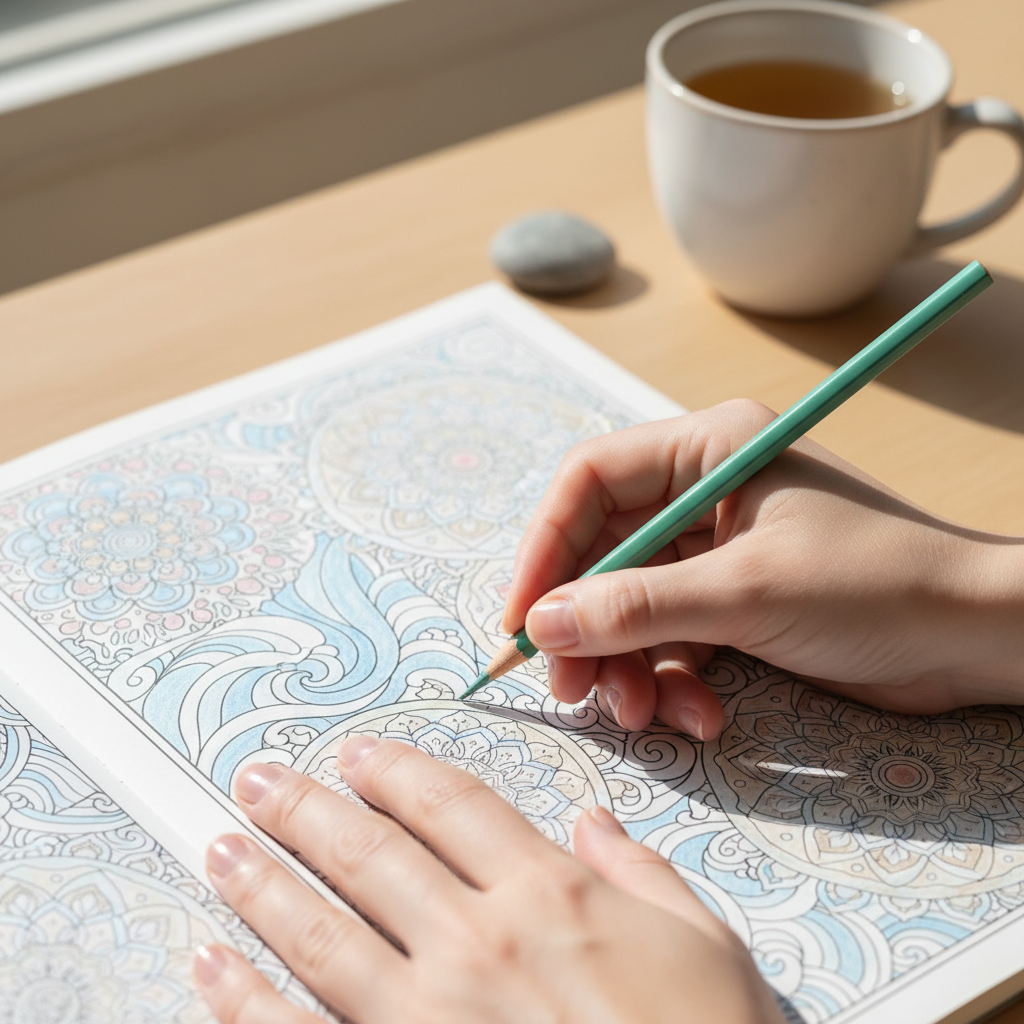
You don't need to be an artist to benefit from this. Using a colouring book or simply doodling on a page allows your brain to rest. Focus on the process rather than the result. Listen to the sound of the pencil on paper and watch the colours fill the space. It is a simple, non-verbal way to release stress.
Mindful Journaling
Writing is a powerful way to connect with your inner thoughts. You might try "stream of consciousness" writing, where you write continuously for five minutes without editing. Alternatively, try a gratitude list. Don't just list items; describe them in sensory detail. For example, "I am grateful for this warm blanket; it feels heavy and comforting against my legs."
Mindful Movement
Connecting breath with movement helps foster a strong mind-body connection. Whether it is a gentle yoga flow, Tai Chi or a simple morning stretch, focus on how your muscles feel rather than how you look. Synchronise your movement with your breath to transform exercise into a moving meditation.
Mindful Listening
Choose a piece of instrumental music or find a spot in nature. Close your eyes and simply listen. Try to pick out individual sounds or instruments. Observe any emotions that arise without getting carried away by them. It is a lovely way to tune in.
Cultivating calm: How to build a lasting mindfulness routine
Starting is often easier than keeping it up. Here is how to make mindfulness a lasting part of your life.
Start Ridiculously Small
The biggest barrier is often feeling overwhelmed. Don't commit to 20 minutes of meditation if you have never done it before. Start with one minute of mindful breathing. Or choose just one daily activity, like brushing your teeth, to do mindfully. Consistency matters far more than duration.
Use Habit Stacking
Link your new habit to an existing one. For instance, "After I pour my morning coffee, I will take three mindful breaths" or "When I sit at my desk, I will do a one-minute grounding exercise." This helps integrate calm into your day naturally.
Set Triggers and Cues
Give yourself gentle reminders. Set a recurring alarm for a midday "Mindful Pause". Place a sticky note on your computer that simply says "Breathe". Use transition points, like arriving home, as a cue to switch gears.
Practice Self-Compassion, Not Perfection
Many people quit because they think they are "bad at it" when their mind wanders. Please remember: mindfulness is not about stopping your thoughts. The real practice happens every time you notice your mind has wandered and you gently bring it back. That moment of noticing is a success, not a failure. Be kind to yourself.
Find a Guide or Community
Sometimes we all need a little help. Apps like Headspace or Calm can be great resources. Books like Wherever You Go, There You Are by Jon Kabat-Zinn offer wonderful guidance. Finding a local class or an online community can also provide the support you need to keep going.
At Mellowed, we are here to support you on this journey. Whether you are using one of our weighted blankets to find comfort or simply taking a deep breath right now, remember that peace is always available to you. Start small. Start today. Let's find your calm, together.